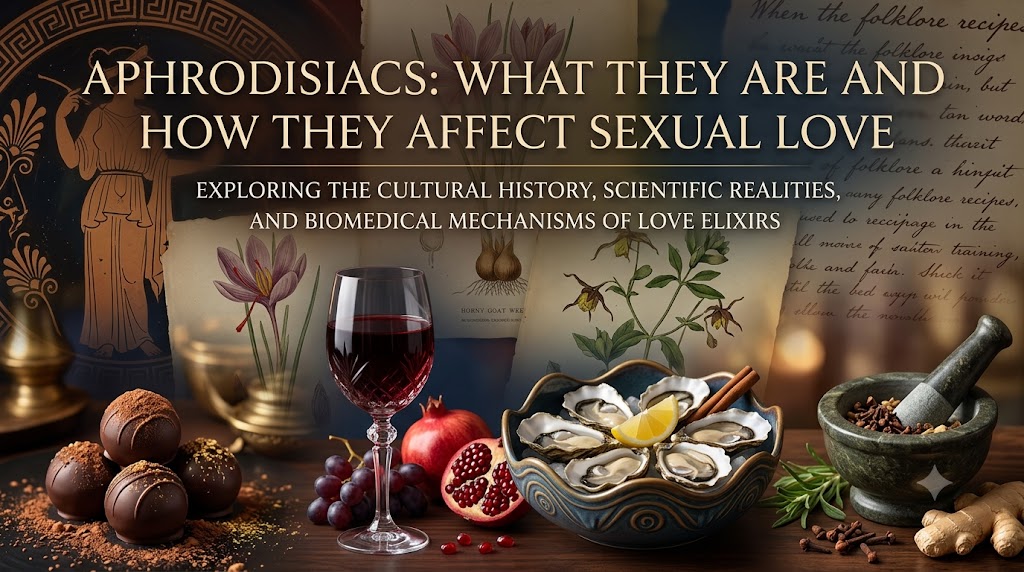
Do aphrodisiacs truly enhance sexual love, or is their power entirely psychological? While historical folklore and modern consumer packaging promise heightened intimacy, clinical research urges a balanced perspective. Discover the cultural history, modern classification, and biochemical mechanisms behind dietary and natural sexual enhancers.
Defining the Aphrodisiac: Etymology and Scope
Aphrodisiacs are substances, foods, and botanical formulations that enhance erotic arousal, sexual attraction, and pleasure in sexual intimacy and relations. Historically and biochemically, these agents have been pursued to enhance the sensory experiences and sensual satisfaction that men and women derive from their sexual partnerships. The word “aphrodisiac” is directly derived from the ancient Greek goddess of love, beauty, and fertility, Aphrodite. Our enduring fascination with these substances emphasizes an essential human desire to enhance sensory pleasure, sexual longevity, physical vitality, and emotional relationships.
The Cultural History of Aphrodisiacs
Throughout history, diverse cultures have sought out aphrodisiacs to boost vitality. From antiquity to the pre-modern era, societies systematically cataloged natural elements—spanning exotic flora, minerals, and animal products—to create love potions and elixirs (Harper, 2005; Nair, Sellaturay, & Sriprasad, 2012; Shamloul, 2010).
Superstition and folklore heavily shaped these perceptions. For instance, many ancient traditions relied on the “doctrine of signatures”—the belief that foods resembling human genitalia, like oysters or avocados, inherently possessed libido-enhancing properties. While early iterations relied on folklore, the cumulative cultural preservation of these recipes established a cross-generational legacy of sexual enhancement practices that bridges ancient mysticism with contemporary holistic wellness.
Contemporary Perspectives on Aphrodisiacs
The historical preservation of ancient botanicals and dietary regimens has carried over into modern sexual relationships. Nowadays, men and women continue to utilize diverse elements to ignite sexual desire, amplify erotic attraction, and achieve heightened sensual fulfillment. The underlying hedonistic pursuit of fulfilling, intense sexual encounters remains a consistent facet of human psychology. Consequently, modern consumers are deeply drawn to products that promise to elevate sensual experience, reduce performance anxiety, and intensify sexual pleasure (Shamloul, 2010; West & Krychman, 2015).
As cultural beliefs have evolved, aphrodisiacs have transitioned from sacred ritual components to consumer-packaged goods, wellness supplements, and experimental culinary trends. However, modern scientific scrutiny demands that researchers investigate whether these substances are legitimately capable of fulfilling the claims rooted in historical tradition. While many men and women choose to integrate these substances into their sexual relationships for their perceived psychological and physiological benefits, clinical research urges caution (Srivatsav et al., 2020; Corazza et al., 2014; Fischer et al., 2023; West & Krychman, 2015). Consequently, studies indicate that unregulated or highly concentrated aphrodisiac supplements can carry unexpected and adverse physiological side effects (Ahmed et al., 2016; Chiang et al., 2017).
The Classification of Modern Aphrodisiacs
To understand the scope of these enhancers, modern researchers classify aphrodisiacs into primary categories based on their origin and chemical composition:
- Culinary Herbs and Spices: Widely accessible plants such as sage, cloves, ginger, and cinnamon, frequently integrated into daily cuisine.
- Dietary Whole Foods: Nutrient-dense options heavily tied to romance and sensory indulgence, such as dark chocolate, oysters, and certain fresh fruits.
- Alcohol and Psychoactive Substances: Compounds such as red wine or cannabis that alter sensory perception, reduce inhibitions, and shift cognitive boundaries.
- Concentrated Natural Supplements: Complex botanical formulations containing potent active ingredients like yohimbine, ginseng (Panax ginseng), maca root (Lepidium meyenii), and horny goat weed (Epimedium).
How Aphrodisiacs Work: Mechanisms of Action
From a biomedical perspective, aphrodisiacs are classified by their primary functional targets: those that augment libido (psychological desire), those that enhance potency (physiological performance), and those that intensify sexual pleasure. Human sexual response relies on a complex interaction of tactile, olfactory, visual, and psychological stimuli processed through the central nervous system, which subsequently coordinates localized vascular changes.
The primary physiological pathway behind physical arousal involves the modulation of smooth muscle relaxation in the genitals, heavily mediated by the nitric oxide (NO) pathway. During sexual arousal, neurochemical signalling activates nitric oxide synthase, prompting the release of NO within vascular tissues. This gas stimulates an enzymatic cascade that produces cyclic guanosine monophosphate (cGMP), which lowers intracellular calcium levels and triggers smooth muscle relaxation. This vasodilation allows blood to pool in the erectile tissues. Many natural supplements, such as Panax ginseng, are believed to operate precisely by enhancing this NO synthesis and improving endothelial health. Other substances target central neurotransmitters, altering dopamine, serotonin, or adrenergic receptors in the brain to lower behavioral inhibitions and intensify emotional responses (Burnett, 2007; Murphy & Lee, 2006; Pfaus, 2009).
Nutritional and Dietary Aphrodisiacs
Dietary aphrodisiacs generally fall into two categories: readily available everyday foods and rare, highly sought-after botanical delicacies. While mainstream clinical science rarely links a single food to an immediate, radical shift in baseline libido, integrating specific nutrient-dense foods can support the vitality and stamina required for an active sexual life.
Kendra Cherry, for example, reviewed several types of aphrodisiac foods and natural supplements that can boost libido and sexual pleasure. A summary of these categories, key nutrients, and examples is outlined in the table below:
| Category | Specific Examples | Key Active Nutrients / Benefits |
|---|---|---|
| Seafood & Essential Fatty Acids | Oysters, Salmon, Walnuts | Zinc (testosterone synthesis), Omega-3 (cardiovascular blood flow) |
| Fruits & Vegetables | Figs, Pomegranates, Watermelon, Asparagus, Avocado | Potassium, Citrulline, Phytochemicals (antioxidant & vascular support) |
| Plant Extracts & Spices | Saffron, Ginger, Garlic | Allicin, Crocin (thermal sensation, micro-circulation) |
Certain foods provide targeted benefits for sexual health. For example, foods rich in Omega-3 fatty acids significantly optimize overall cardiovascular health, which directly ensures healthy blood flow to the pelvic organs. Fruits like pomegranates and watermelons contain compounds like L-citrulline, an amino acid that acts as a precursor to nitric oxide, thereby supporting the vascular pathways essential for arousal. Meanwhile, foods high in zinc—such as oysters—and those rich in potassium and phytochemicals help elevate mood, reduce oxidative stress, and foster a sense of physical well-being.
Dietary Indulgences: The Science of Chocolate and Wine
Dark chocolate is among the most culturally celebrated sensory enhancers Dark chocolate contains biogenic amines like tyramine and phenylethylamine, alongside methylxanthines and cannabinoid-like fatty acids. These compounds are theoretically linked to increased serotonin synthesis within the brain, which helps elevate mood. However, empirical evidence remains mixed. While some studies suggest these compounds improve micro-circulation, comprehensive clinical reviews controlled for age have shown no significant objective variance in Female Sexual Function Index (FSFI) scores between consistent chocolate consumers and non-consumers. Thus, chocolate’s reputation may stem more from its luxurious psychological appeal than direct pharmacological action (Bruinsma & Taren, 1999; Salonia et al., 2006).
In contrast, light to moderate alcohol consumption shows a more distinct relationship with sexual response, primarily due to its ability to lower central nervous system inhibitions. Research highlights a compelling link between moderate red wine consumption and female sexual health. A landmark study evaluated healthy women in the Chianti region of Italy and categorized them by their drinking habits (Mondaini et al., 2009).
The researchers discovered that women who consumed one to two glasses of red wine daily scored significantly higher on the FSFI, particularly within the domains of sexual desire and pelvic lubrication, compared to teetotalers or heavy drinkers. This effect is attributed to both the ethanol content and the rich concentration of antioxidant polyphenols and flavonoids present in red wine, which promote localized vasorelaxation. Nonetheless, this finding must be approached with balance: while low doses can successfully reduce psychological barriers, excessive alcohol intake acts as a central nervous depressant, ultimately hindering physical performance and undermining sexual health (Basile et al., 2023; Brunetti, 2020; Kotta, Ansari, & Ali, 2013; Luz & Coimbra, 2004; Mondaini et al., 2009; Rachdaoui & Sarkar, 2013).
Conclusion: Balancing Tradition and Science
The enduring pursuit of aphrodisiacs highlights a fundamental human desire to deepen sensory intimacy, sexual vitality, and sensual pleasure. While history and folklore have left behind a rich legacy of love elixirs, modern science suggests a more grounded perspective. Some substances, like red wine or nutrient-dense whole foods, offer genuine vascular or psychological benefits when enjoyed in moderation. Others operate primarily on luxury and the power of psychological expectation. Ultimately, navigating the modern marketplace of sexual enhancers requires a balance of cultural appreciation and clinical caution—ensuring that the pursuit of pleasure always prioritizes physiological safety.
References
Ahmed, M., Kumari, S., Manali, P., Sonje, S., & Malik, M. (2016). Safety and quality concerns regarding over-the-Counter sexual enhancement products Sold in the USA Market Pose a major health risk. Journal of Addiction Research & Therapy, 7(5), 299.
Basile, L., Condorelli, R., Calogero, A., Cannarella, R., Barbagallo, F., Crafa, A., Aversa, A., & La Vignera, S. (2023). Red Wine and Sexual Function in Men: An Original Point of View. Journal of Clinical Medicine, 12(12), 3883. https://doi.org/10.3390/jcm12123883
Bruinsma, K., & Taren, D. L. (1999). Chocolate: food or drug?. Journal of the American Dietetic Association, 99(10), 1249-1256.
Brunetti, P., Lo Faro, A. F., Tini, A., Busardò, F. P., & Carlier, J. (2020). Pharmacology of herbal sexual enhancers: a review of psychiatric and neurological adverse effects. Pharmaceuticals, 13(10), 309. https://doi.org/10.3390/ph13100309
Burnett, A. L. (2007). The role of nitric oxide in erectile dysfunction: implications for medical therapy. The Journal of Clinical Hypertension, 8, 53-62.
Corazza, O., Martinotti, G., Santacroce, R., Chillemi, E., Di Giannantonio, M., Schifano, F., & Cellek, S. (2014). Sexual enhancement products for sale online: raising awareness of the psychoactive effects of yohimbine, maca, horny goat weed, and Ginkgo biloba. BioMed Research International, 2014(1), 841798.
Chiang, J., Yafi, F. A., Dorsey Jr, P. J., & Hellstrom, W. J. G. (2017). The dangers of sexual enhancement supplements and counterfeit drugs to “treat” erectile dysfunction. Translational Andrology and Urology, 6(1), 12–19. https://doi.org/10.21037/tau.2016.10.04
Fischer, T., Tucker, J., Li, C., Min, K., Xu, D., Upjohn, L., & Kumar, M. (2023). Cross-sectional survey of adulterated sexual enhancement products sold in the Sacramento area of California. Nutrition and Dietary Supplements, 15, 111–120. https://doi.org/10.2147/nds.s409032
Harper, D. (2005). Ancient and medieval Chinese recipes for aphrodisiacs and philters. Asian Medicine, 1(1), 91–100. https://doi.org/10.1163/157342105777996764
Kotta, S., Ansari, S. H., & Ali, J. (2013). Exploring scientifically proven herbal aphrodisiacs. Pharmacognosy Reviews, 7(13), 1–10.
Luz, P. D., & Coimbra, S. R. (2004). Wine, alcohol and atherosclerosis: clinical evidences and mechanisms. Brazilian Journal of Medical and Biological Research, 37(9), 1275-1295.
Mondaini, N., Cai, T., Gontero, P., Gavazzi, A., Lombardi, G., Boddi, V., & Bartoletti, R. (2009). Regular Moderate Intake of Red Wine is Linked to a Better Women’s Sexual Health. The Journal of Sexual Medicine, 6(10), 2772–2777.
Murphy, L. L., & LEE, T. J. F. (2006). Ginseng, sex behavior, and nitric oxide. Annals of the New York Academy of Sciences, 962(1), 372-377.
Nair, R., Sellaturay, S., & Sriprasad, S. (2012). The history of ginseng in the management of erectile dysfunction in ancient China (3500-2600 BCE). Indian Journal of Urology, 28(1), 15-20.
Pfaus, J. G. (2009). Pathways of sexual desire. The Journal of Sexual Medicine, 6(6), 1506–1533. https://doi.org/10.1111/j.1743-6109.2009.01309.x
Pyke, R. E. (2020). Sexual performance anxiety. Sexual Medicine Reviews, 8(2), 183-190.
Rachdaoui, N., & Sarkar, D. K. (2013). Effects of Alcohol on the Endocrine System. Endocrinology and Metabolism Clinics of North America, 42(3), 593–615. https://doi.org/10.1016/j.ecl.2013.05.008
Salonia, A., Fabbri, F., Zanni, G., Scavini, M., Fantini, G. V., Briganti, A., … & Montorsi, F. (2006). Chocolate and women’s sexual health: An intriguing correlation. The Journal of Sexual Medicine, 3(3), 476-482.
Shamloul, R. (2010). Natural aphrodisiacs. The Journal of Sexual Medicine, 7(1), 39–49. https://doi.org/10.1111/j.1743-6109.2009.01521.x
Srivatsav, A., Balasubramanian, A., Pathak, U. I., Rivera-Mirabal, J., Thirumavalavan, N., Hotaling, J. M., & Lipshultz, L. I. (2020). Efficacy and safety of common ingredients in aphrodisiacs used for erectile dysfunction: A review. Sexual Medicine Reviews, 8(3), 431–442. https://doi.org/10.1016/j.sxmr.2020.01.001 West, E., & Krychman, M. (2015). Natural aphrodisiacs—A review of selected sexual enhancers.The Journal of Sexual Medicine, 12(4), 1017–1026. https://doi.org/10.1111/jsm.12836