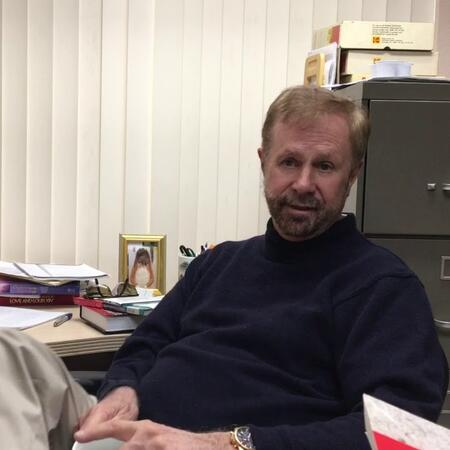
With profound sadness, the International Institute of Love and Relationship Studies and The Diversity of Love Journal share the news of the passing of William (Bill) R. Jankowiak on July 19, 2026.
William Jankowiak (1956–2026), a distinguished figure in anthropology, significantly influenced our understanding of love, intimacy, and family structure across cultures. His innovative research, which challenged Western-centric assumptions about interpersonal relationships, substantially contributed to the anthropology of intimacy and established the cross-cultural study of love as a legitimate scientific field of anthropological research. He was a pioneering figure whose lifelong work demonstrated that romantic love is not a unique Western cultural construct but rather a fundamental, cross-cultural experience present across diverse societies worldwide.
The Universality of Passionate Love: Challenging Western Cultural Biases
For decades, the prevailing consensus across cultural anthropology and the social sciences viewed passionate and romantic love as a cultural artifact of Western cultures, European courtly traditions, literature, or modern romantic ideologies. Anthropologists frequently argued that while sexual desire and biological reproduction were universal human behaviors, romantic love was a culturally limited experience unknown or irrelevant in most non-Western societies.
In his research, Bill Jankowiak fundamentally upended this mainstream view. In his landmark 1992 cross-cultural study he co-authored with Edward F. Fischer, Jankowiak utilized the Standard Cross-Cultural Sample to systematically investigate the presence of passionate love in societies across many cultures of the world. Evaluating ethnographic indicators—such as native accounts of passionate yearning, love songs and folklore highlighting romantic motives, elopements driven by mutual affection, and explicit ethnographer affirmations—the study revealed clear evidence of romantic love in approximately 91% of the cultures examined. These empirical findings provided convincing evidence that romantic passion is a recurrent and culturally salient feature of people’s lives across diverse human societies.
Investigating Love and Partner Selection in Urban China
Jankowiak’s theoretical views were anchored in deep, immersive ethnographic fieldwork. Moving beyond abstract theoretical speculation, he spent decades investigating changing patterns of marriage, sexuality, and family dynamics in urban China—most notably in Hohhot, Inner Mongolia, where he was among the first American anthropologists to conduct ethnographic research in mainland China, let alone in a minority region.
Jankowiak documented how ordinary people negotiated the shifting boundaries between arranged expectations and personal affection. He observed that even in social settings where explicit vocabulary surrounding “love” was muted or constrained by public convention, individuals deeply valued and actively sought emotional connection in partner selection. His extensive fieldwork in China culminated in seminal monographs, including Sex, Death, and Hierarchy in a Chinese City (1993) and Family Life in China (with Robert Moore, 2017). These books highlighted how universal psychological predispositions toward interpersonal attraction are continuously shaped, mediated, and expressed through local cultural meaning systems.
Expanding the Anthropological Landscape of Love and Intimacy
Beyond his foundational work on romantic passion, Jankowiak continuously expanded the anthropology of love and family relationships by editing major ethnographic volumes and authoring profound later works that explored the wide spectrum of love, families, plural marriage, and evolutionary mating anxieties.
- Edited Volumes on Love and Intimacy: In his edited books such as Romantic Passion: A Universal Experience? (1995), and Intimacies: Love and Sex Across Cultures (2008), he brought together diverse ethnographers to investigate how different societies conceptualize longing, jealousy, commitment, and sexual desire. Romantic Passion was the first ethnographic edited volume on love and intimacy of its kind and helped cement love as a legitimate topic of anthropological study. His latest volume Love Apocalypse: New Intimacies and the Decline of Marriage and Fertility (with Nelson & de Munck, 2026) expanded this work by exploring contemporary transformations in intimate relationships and their implications for demographic shifts away from marriage and parenthood.
- The Dynamics of Plural Love: In his later masterwork, Illicit Monogamy: Inside a Fundamentalist Mormon Community (2023), Jankowiak drew upon extensive longitudinal research to explore the internal psychodynamics of fundamentalist polygamous families. Challenging simple political-economy frameworks, he argued that people are fundamentally wired for emotional monogamy. He demonstrated how the natural human drive toward an exclusive, dyadic love bond creates internal psychological friction and tension within plural family structures that endorse and support collective, non-dyadic harmony. His forthcoming book with Bruce Whitehouse, Polygamy: The Basics (2026) provides an interdisciplinary overview of academic understandings of polygamy past and present.
- The Cross-Cultural “Femme Fatale” Phenomenon: Expanding into evolutionary psychology and folklore, Jankowiak spearheaded landmark cross-cultural studies investigating the universal presence of the “femme fatale” or dangerous woman archetype across global societies (e.g., Jankowiak & Ramsey, 2000). Demonstrating that recognizable imagery of the dangerous female enchantress appears across an overwhelming majority of studied cultures, his research revealed that these cautionary myths are not mere local tropes, but culturally mediated reflections of evolved mating anxieties—specifically, male fears of romantic deception, asymmetrical emotional investment, and the high reproductive risks associated with intense mating competition.
- Romantic Kissing in Cross-Cultural Perspective: Along with collaboratorsShelly Volsche and Justin Garcia, Jankowiak called into question the universality of the romantic-sexual kiss. After a systematic analysis of a large sample of cultures in the human Relations Area Files (eHRAF), Jankowiak found no evidence that romantic-sexual kissing is a universally practiced or desirable behavior. Rather, he suggests that factors such as the need for clothing in harsher climates may have provided some of the impetus for romantic mouth-to-mouth kissing, as clothing posed a barrier to kissing other, perhaps more hygienic, parts of the body.
The Enduring Legacy of William Jankowiak
Bill Jankowiak approached the anthropology of love and intimacy with intellectual courage, methodological rigor, and a legendary wit that transformed scholarly debates into engaging academic adventures. He viewed love and relationships not as stable social systems but as dynamic emotional landscapes driven by universal yearnings, love, and local cultural traditions. Despite these conditions and eminent interest in bio-social explanations of behavior, Jankowiak was a deeply insightful ethnographer who privileged empirical evidence over theoretical orthodoxy.
Now that he is no longer with us to guide the field, researchers of love and relationships and his fellow anthropologists deeply mourn the loss of his sharp insights and generous mentorship. Nevertheless, his legacy lives on through his extensive publications, his foundational findings, and the vibrant community of scholars he inspired to ask bigger questions about human nature.
Personal Reminiscences: Remembering Bill Jankowiak
The best way to honor William Jankowiak is to carry forward his intellectual curiosity—deepening our cross-cultural understanding of how people connect, love, and maintain interpersonal relationships across boundaries of time, place, and cultures.
Reflections and Tributes
Alex J. Nelson, Department of Anthropology, University of Indianapolis, USA:
“Bill’s intellectual curiosity knew no bounds and his generosity as a collaborator and mentor was unparalleled. His door was always open to his students and virtually every conversation with him seemed to spark a new question or insight. Bill was kind, and funny, and fearless in the pursuit of knowledge. All of us who knew and loved him will continue to miss him deeply. But I expect his boundless curiosity is driving him onward even now, though whatever waits for us beyond this life.”
Victor de Munck, Institute of Asian and Transcultural Studies at Vilnius University, Lithuania:
“When we first met around 1995—ages ago—we didn’t know each other and just happened to sit side by side at a conference. We started talking, and let me tell you, when Bill talked, he combined humor, spontaneity, and intelligence effortlessly. He stood at that rare intersection of delight, brilliance, and infectious laughter.
At the time, he was already a well-known professor and a rising star in anthropology, perhaps being the first to braid culture and evolution together to discover that romantic love is a cultural universal rather than a concept limited to any single geographical or cultural domain. He changed the shape, theories, and methods of both anthropology and evolutionary psychology.
Bill had a unique capacity to offer critique in a way that was always constructive rather than destructive to his colleagues. He taught me a new way of speaking—one filled with laughter while drilling for fresh insights into the culture we all share. Bill was someone who could seamlessly knit together the warp and woof of anthropology’s hybridity. He was a true explorer and seeker of truth regarding what culture is, what it does, and what it doesn’t do.
We will miss his laughter, his generosity, his relentless curiosity, and his refusal to stop asking the big questions. The conversations may have ended, but the questions he taught us to ask will remain with us. Farewell, Bill. We will do our best to keep the fire burning. “
Adam Bode, Evolution Lab, University of Melbourne, Australia:
“I had the pleasure of interacting with Bill several times since starting my PhD. Each time he was friendly, helpful, and encouraging. The first was via email when I asked him which cultures he hadn’t found love in. He remarked that no one had ever asked him that before and he spent time trying to find the answer for me. Very recently, he was collaborating with another love researcher and me in the early stages of a project to answer this question unequivocally. He was enthusiastic about the project.
It was at the recent Royal Society meeting on love where I got to meet him in person and gained real appreciation for him not only as a scholar, but also a person. His talk seemed unprepared, but it was engaging and I think of it as the most interesting talk of the meeting. On the last night of the meeting we shared a beer and chatted about life, the universe, and love. I made a self-deprecating comment to him that I had thrown my presentation together at the last minute and I thought it was “just good enough.” He smiled, paused, and said to me, “you were invited for the work you’ve already done, not this presentation.” It’s probably the nicest and most sobering thing anyone has ever said to me about my research contribution and it will stick with me for life. I posted this experience on LinkedIn and one of Bill’s colleagues commented, “That is such a Bill comment.” I got to tell him how much I appreciated some of his work. He gave me the background to some of that work which I really value. I really liked the guy.”
Lihong Shi, Department of Anthropology, Case Western Reserve University, USA:
“Bill was one of the leading scholars in the study of Chinese families. Throughout his long and distinguished career, his prolific work on love, intimacy, and intergenerational relations in China profoundly shaped our understanding of the Chinese family and its transformations. Bill was also generous in his support of junior scholars. I first met him through my advisor when I was still a graduate student, and from that time onward, he was a strong and steadfast supporter of my work. I will always be grateful for his generosity and encouragement. He will be greatly missed.”
Shelly Volsche, Department of Anthropology, Boise State University, USA:
“Bill changed the way I think and see the world. Not because he influenced what I thought; rather, I looked at things more deeply. I saw layers to stories and experiences where I once saw dichotomies. I remember him sharing an analogy of other social sciences holding a globe in their hands and trying to understand the world. “Anthropologists turn things upside down,” he said as he rotated his wrist.
He encouraged thinking, and gave me clear expectations when I wasn’t writing enough – “Writing is thinking, you need to do it every day.” When I provided an out of the norm perspective, he never judged. Instead, he challenged me to provide ethnographic evidence and theoretical justifications. When we first completed the survey which would later underpin our thesis regarding parenting among Chinese singletons, Bill was even more excited than me. I told him that over 90% of the sample agreed or strongly agreed with the statement, “Parenthood is a personal choice,” and he said, “Well, that’s new.” I often walked away from research meetings invigorated with a mind full of new ideas.
Now, as I mentor my own graduate students, I see and hear Bill’s voice. It may be in the way I phrase encouragement, the paper. Write the book.” Or it may be in the way I explore the underpinning ideas before details, “The question decides the method.” I am proud that Bill was my mentor, coauthor, colleague, and friend. One of my guiding reflections is, and will always be, WWBJD (What would Bill Jankowiak do?).
Victor Karandashev. Professor, International Institute of Love and Relationship Studies, USA:
“Bill, as a pioneering figure in the cross-cultural anthropology of love, was very supportive of me as a latecomer to the field of cross-cultural research. Our professional relationship evolved quickly and very well. He was an enthusiastic supporter of our endeavors to run regular international conferences on love and relationship studies. Our last email exchange was very touching to me. Knowing he had less than a week to live, he wrote that he wished we had met earlier in our careers. I had the same feeling…”
Key Publications
- Jankowiak, W. R. (1993). Sex, death and hierarchy in a Chinese city: An anthropological account. Columbia University Press.
- Jankowiak, W. R. (Ed.). (1995). Romantic passion: A universal experience? Columbia University Press.
- Jankowiak, W. R. (1999). Affection and the sexual culture: A cross-cultural perspective. In D. N. Suggs & A. W. Miracle (Eds.), Culture, biology, and sexuality (Vol. 32, pp. 49–64). Georgia State University Press.
- Jankowiak, W. R. (Ed.). (2008). Intimacies: Love and sex across cultures. Columbia University Press.
- Jankowiak, W. R. (2023). Illicit monogamy: Inside a fundamentalist Mormon community. Columbia University Press.
- Jankowiak, W. R., & Fischer, E. F. (1992). A cross-cultural perspective on romantic love. Ethnology, 31(2), 149-155.
- Jankowiak, W. R., & Moore, R. (2017). Family life in China. Polity Press.
- Jankowiak, W. R., & Ramsey, S. (2000). Femme fatale and status fatale: A cross-cultural perspective. Cross-Cultural Research, 34(1), 57–69.
- Jankowiak, W.R., Volsche, S.L. and Garcia, J.R. (2015), Is the Romantic–Sexual Kiss a Near Human Universal?. American Anthropologist, 117: 535-539. https://doi.org/10.1111/aman.12286
- Nelson, A., de Munck, V., & Jankowiak, W. (Eds.). (2026). Love Apocalypse: new Intimacies and the Decline of Marriage and Fertility. Rutgers University Press.
- Whitehouse, B. & Jankowiak, W. (2026). Polygamy: The Basics. Routledge.