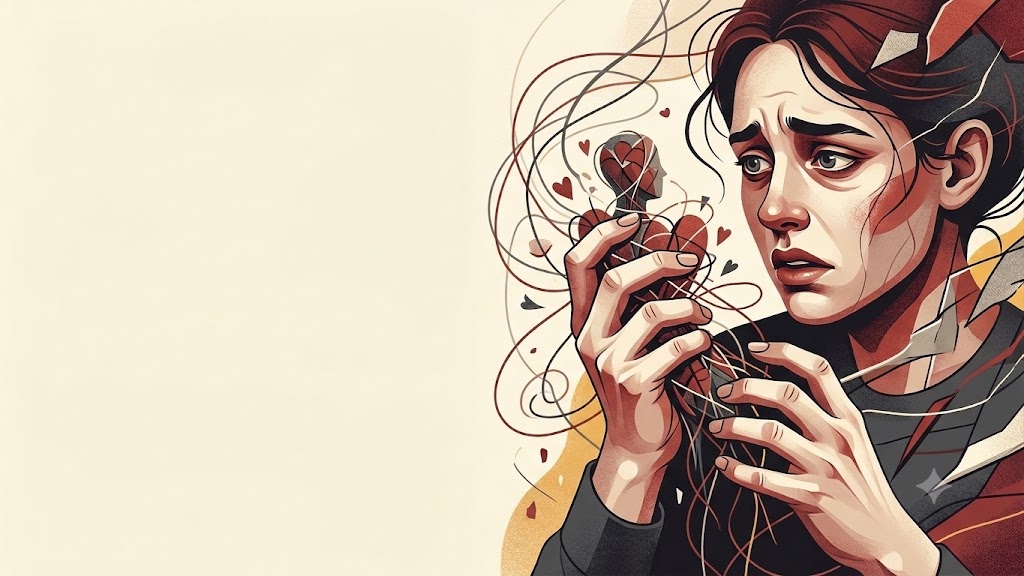
Love can be a source of deep security, but for some, it is defined by constant volatility, possessiveness, and an intense fear of loss. Known as the Mania love style, this style of love combines passionate romanticism with deep relational anxiety. Drawing on cross-cultural research and love style theory, this article explores the psychological mechanisms behind manic love, how culture shapes its expression, and what it reveals about the fine line between devotion and obsession.
The History Behind Love Styles
The theory of six love styles became well-known among love scholars in the 1980s. Multiple researchers embraced these ideas and investigated the love styles that Canadian sociologist John Alan Lee proposed and explored in the 1970s (Lee, 1973, 1976). His theory and research on love styles made significant and original contributions to this area of research (Karandashev, 2022). Later, Mania love style was transformed into the Mania love attitude measured with the Love Attitudes Scale (LAS) developed by Clyde and Susan Hendrick (1986, 1990).
John Lee theoretically conceptualized and empirically identified six love styles. The original author’s descriptions of the six love styles he proposed have been condensed and simplified over the years of love research and publication. These abbreviated characteristics have slightly altered Lee’s original meanings of the love styles (see more in other articles, such as Exploring Love Styles Through Narratives: Revisiting J. Lee’s Original Method and The Evolution of Love Typologies: From Lee’s Love Styles to Hendrick’s Love Attitudes).
John Lee grounded his theory of love styles in the context of the socio-cultural frameworks and explained how cultural ideologies framed modern styles of love.
In the following articles, I have provided a more in-depth description of each of these love styles in other articles about the Eros, Ludus, and Storge love styles. Here we review the Mania love style in greater detail.
Mania is one of the three secondary love styles identified by John Alan Lee.
Theoretical Description of the Mania Love Style
Briefly, the Mania love style represents an intense, obsessive, and highly volatile approach to romantic relationships (Hendrick & Hendrick, 1986; Lee, 1973). It was first operationalized within John Alan Lee’s color theory of love (1973, 1976).
I summarize his description as follows,
“Individuals with the Mania love style are emotionally intense, very obsessive and preoccupied with the beloved, and therefore frequently jealous. They crave repeated reassurance of being loved.”
(Excerpt from Karandashev, 2022, p. 78).
Mania is classified as a secondary love style (Lee, 1973). It emerges from a potent, often turbulent combination of two primary love styles: Eros (passionate, physical, and romantic love) and Ludus (playful, uncommitted, and game-playing love) (Lee, 1973).
While Eros brings deep emotional intensity and a craving for physical intimacy, Ludus introduces themes of uncertainty, strategy, and power dynamics (Lee, 1973). When these two styles merge, they produce a high-arousal, emotionally demanding relationship orientation characterized by anxious attachment, possessiveness, hyper-vigilance, and extreme mood swings (Hendrick & Hendrick, 1986; Karandashev, 2019, 2022).
Mania represents an emotionally charged disposition wherein an individual’s sense of self-worth and emotional stability become entirely dependent on their partner’s continuous validation (Lee, 1973; Karandashev, 2019).
This Is How Lee Investigated the Mania Style of Love in His Original Study
In-depth interviews with 120 people generated approximately 100,000 data points using the “love story card sort” method. The basic form of factor analysis discovered 32 factors that clearly distinguished the six love styles. Lee used this analysis to depict the following characteristics of the Mania love style:
“Participants with the Mania style of love generally recall their childhood as unhappy. They often do not enjoy their work, have few friends, and feel lonely. They are anxious to fall in love, yet they are not aware for sure which physical type of a potential partner they perceive as attractive. They frequently fall in love with someone who they initially dislike.
Lovers with Mania style typically experience intense emotions of attraction and preoccupation with a loved one. These feelings of intense attraction resemble the Eros love style. However, they want to restrain their feelings. They tend to manipulate a partner in a relationship. This resembles the Ludus love style. Therefore, they experience contradictory emotions of ambivalence and tension, love and hate, closely intertwined. They are torn on two sides. The lovers of mania style are obsessively preoccupied with the beloved, experiencing and expressing jealousy. They can imagine various rivals and disasters but tend to ignore the warning signs of relationship difficulties until it is too late. “
(Excerpt from Karandashev, 2022, p. 81).
The Mania Love Style is a Love Type rather than a Variable
This descriptive portrayal shows that the Mania love style is a unique combination of characteristics that men and women exhibit in romantic relationships. They represent their values and love attitudes, emotional experiences and expressions, actions and interactions. The data from the interviews evidently indicates these distinguishing characteristics. The manner in which they are connected exemplifies the typological structure of the Mania style. So, the Mania love style is a type of love rather than a variable, how it is measured with the Love Attitude Scale (Hendrick & Henrick, 1986, 1998).
Key Characteristics of Manic Lovers
Individuals who embody the Mania style of how they experience and express love have several core features:
- Obsessive Cognition and Intrusion: Manic lovers experience recurrent, intrusive thoughts about their partner (Hendrick & Hendrick, 1986; Lee, 1973). They spend vast amounts of time daydreaming, analyzing subtle shifts in their partner’s behavior, and feeling preoccupied with the relationship (Karandashev, 2019).
- High Emotional Volatility: Mania is characterized by dramatic shifts in mood—rapidly oscillating between intense euphoria when feeling validated and deep despair, anxiety, or jealousy when sensing distance or ambiguity (Lee, 1973; Karandashev, 2019, 2022).
- Possessiveness and Intense Jealousy: Fueled by a persistent fear of rejection or abandonment, manic lovers exhibit strong possessive tendencies (Hendrick & Hendrick, 1986). They require constant reassurance, exclusivity, and proximity (Karandashev, 2019).
- Somatic and Physiological Arousal: Karandashev (2019) emphasizes that the subjective experience of love is deeply embodied. Manic individuals frequently experience intense autonomic nervous system responses, such as a racing heart, insomnia, loss of appetite, a “knot” in the stomach, and physical agitation during times of relationship uncertainty (Karandashev, 2019; Lee, 1973).
- Low Tolerance for Relational Ambiguity: Unpredictability or subtle cues of distance from a partner trigger acute distress (Karandashev, 2019, 2022). Individuals high in Mania struggle with relational uncertainty and often escalate conflicts or demand immediate clarification to soothe their internal anxiety (Karandashev, 2019).
- Low Self-Esteem and Dependent Validation: The core psychological drive in Mania is a desperate need to be loved and needed, often rooted in low self-regard and a view of the self as unworthy unless validated by an idealized partner (Lee, 1973; Karandashev, 2019).
Unpacking the Experience of Manic Love
The experience and expression of love in the Mania style are based on their views across the multiple planes of psychological reality, such as an emotional process, a dispositional attitude, an affective trait, and a pattern of interaction.
1. Cognitive Appraisals and Relational Uncertainty
Emotions evolve through cognitive appraisals—the ways individuals evaluate and interpret events within their environment. In romantic relationships, appraisals focus on the partner’s actions, intentions, and the relationship’s overall stability (Karandashev, 2019, 2022).
Manic lovers possess a hyper-vigilant appraisal bias. Neutral or ambiguous events (e.g., a delayed response or a neutral tone of voice) are rapidly appraised as signs of fading affection, impending rejection, or relational threat. Because Mania involves a very low tolerance for ambiguity, these appraisals trigger immediate negative affect, panic, and defensive action tendencies aimed at re-establishing control or closeness (Karandashev, 2019, 2022).
2. Moods, Traits, and Pathological Personality Features
While a surge of infatuation can temporarily make anyone feel overly anxious, Mania functions as a long-term emotional disposition or trait (Hendrick & Hendrick, 1986; Karandashev, 2019, 2022).
- Personality Traits: Research indicates that Mania correlates strongly with high Neuroticism (emotional instability, trait anxiety, and negative affectivity) and anxious attachment orientation (Karandashev, 2019, 2022).
- Pathological Attributes: In contemporary personality research, Mania is associated with clinical and sub-clinical dark traits, disinhibition, and high vulnerability to rejection sensitivity (Karandashev, 2022).
- Hypomanic Dynamics: As Karandashev (2019) notes, the elevated arousal, obsessive focus, intrusive imagery, and decreased need for sleep experienced during early manic love closely parallel hypomanic mood states.
3. Behavioral Manifestations and Relational Interactions
Love is not merely an internal feeling state; it consists of overt behaviors, communication habits, and interactional scripts. In a relationship, the manic individual operates heavily from an approach-avoidance conflict (Karandashev, 2019):
- Approach Tendencies: Driven by an intense drive for intimacy and reassurance, they lean in excessively, demanding physical proximity, frequent communication, and constant emotional displays (Lee, 1973; Karandashev, 2019).
- Reactive Avoidance or Hostility: When their partner fails to meet these extreme expectations, the manic lover may lash out with anger, manipulate situations to test the partner’s loyalty, or engage in dramatic relational displays (Lee, 1973; Karandashev, 2019).
How People Experience and Express Love in Different Cultural Contexts
Karandashev (2017, 2019) demonstrated how culture shapes both the internal experience (subjective feeling, physiological arousal, cognitive framing) and the external expression (display rules, behavioral scripts, communication) of romantic love.
1. Western Individualism vs. Interdependent Cultural Contexts
In individualistic Western contexts, romantic love is heavily tied to personal emotional satisfaction and authentic self-expression. In these cultures, high intensity (Eros) is celebrated, but when combined with possessiveness (Mania), Western clinical frameworks label it as codependency or anxious attachment (Karandashev, 2019, 2022).
In collectivist or interdependent cultural contexts, romantic feelings and modern ways of how people love are integrated into family structures, social obligations, and community networks (Karandashev, 2019, 2022). Karandashev (2019) points out that in these contexts, manic emotional volatility and possessive control are often viewed as disruptive to communal balance and social harmony, leading to stronger social display rules that inhibit the public expression of manic jealousy.
2. Emotional Complexity and Dialectical Tolerance
There are significant cross-cultural variations in emotional complexity—how people handle experiencing multiple or conflicting emotions simultaneously:
- Linear Emotional Models: In North American and Western European cultures, positive and negative emotions are typically perceived as opposite ends of a spectrum. Experiencing negative affect (jealousy, fear, anxiety) concurrently with love creates strong cognitive dissonance, making Mania feel especially distressing and dysfunctional (Karandashev, 2019).
- Dialectical Emotional Models: In East Asian and other non-Western traditions, there is a higher tolerance for emotional complexity and ambivalence. Individuals are more accustomed to feeling mixed states—such as experiencing deep affection alongside anxiety, duty, or sadness—which fundamentally alters how the turbulent emotions of Mania are subjectively processed and tolerated (Karandashev, 2019).
3. Linguistic Diversity and Conceptualization
The English term “love” covers a broad semantic range that fuses passion, friendship, and commitment. Across world languages, distinct terms exist to categorize various relational states. For instance, Ancient Greek explicitly separated Eros, Storge, Agape, and Mania, providing clear linguistic boundaries for obsessive passion that distinguish it from companionate or selfless love (Lee, 1973; Karandashev, 2019, 2022). The presence or absence of specific lexical items in a language directly influences how individuals conceptualize, recognize, and communicate their manic experiences (Karandashev, 2019).
Practical Implications for Relationships and Counseling
Understanding Mania through cross-cultural and multi-level lens yields several actionable recommendations for relationship research and clinical practice:
- Recognizing Anxious Attachment and Reassurance Cycles: Manic relationship behaviors frequently stem from underlying attachment insecurity. Identifying that excessive surveillance, texting, or jealousy are expression strategies meant to soothe deep rejection fears helps clinicians address the root anxiety rather than focusing strictly on surface arguments (Karandashev, 2019, 2022).
- Restructuring Hyper-Vigilant Appraisal Biases: Cognitive-behavioral interventions can help manic partners identify their appraisal biases—teaching them to notice when they are misinterpreting ambiguous partner cues as immediate signs of abandonment (Karandashev, 2019).
- Navigating Intercultural Romantic Clashes: Intercultural partners often operate from different implicit display rules and cultural models of love. A behavior that one partner views as normal commitment or modern ways of how people love (such as constant check-ins) may be appraised by a partner from another culture as intrusive, manic possessiveness . Cross-cultural counseling frameworks can assist couples in negotiating shared relational norms and communication scripts (Karandashev, 2019).
Conclusion
Viewed through an integrative, cross-cultural lens, manic devotion is not merely an individual trait, but a complex emotional orientation shaped by cognitive, physiological, and cultural factors. Its volatile combination of intensity and insecurity creates deep relational distress. By recognizing the underlying fears driving the Mania love style, both individuals and practitioners can better distinguish passionate connection from overwhelming possessiveness—paving the way for healthier, more grounded relationships.
References
- Hendrick, C., & Hendrick, S. S. (1986). A theory and method of love. Journal of Personality and Social Psychology, 50(2), 392–402.
- Karandashev, V. (2019). Cross-Cultural Perspectives on the Experience and Expression of Love. Springer.
- Karandashev, V. (2022). Cultural Typologies of Love. Springer.
- Lee, J. A. (1973). Colors of Love: An Exploration of the Ways of Loving. Newpress.
HOW TO CITE THIS ARTICLE
Karandashev, V. (2022, October 14). What is the mania love style? The Diversity of Love Journal. https://love-diversity.org/what-is-the-mania-love-style/